01 — Before the peso: gold and exchange across the islands
The monetary history of the Philippines begins long before the arrival of Spanish expeditions. Communities throughout the archipelago traded with neighbouring Asian societies, using gold in several forms and encountering Chinese coins through maritime networks. Exchange was already sophisticated, even though it did not always resemble the coin-based payments familiar to Europeans.
This early history matters because the Philippines were never simply an extension of Europe. The islands had their own commercial traditions, crafts and sea routes. The Spanish peso entered an existing world of exchange and gradually changed it.
02 — Manila galleons: American silver crosses the Pacific
Spanish rule drew the Philippines into an extraordinary transpacific commercial system. Galleons sailing between Acapulco and Manila carried silver coins derived from the mines of the Americas. Merchants exchanged that silver for Asian textiles, porcelain and other goods that would travel onwards through the Spanish world.
The eight-real coin, widely known as the peso, became a symbol of this trade. Its acceptance rested on the reputation of its metal as well as the reach of the routes along which it travelled. In Philippine ports, it circulated alongside Chinese coins and long-established local methods of doing business.
03 — A distinctly Philippine currency takes shape
The establishment of the Manila mint, which began operations in 1861, was a milestone in the archipelago's monetary history. Coins made locally still bore Spanish royal symbols, but their production revealed the growing importance of Manila as a financial and commercial centre.
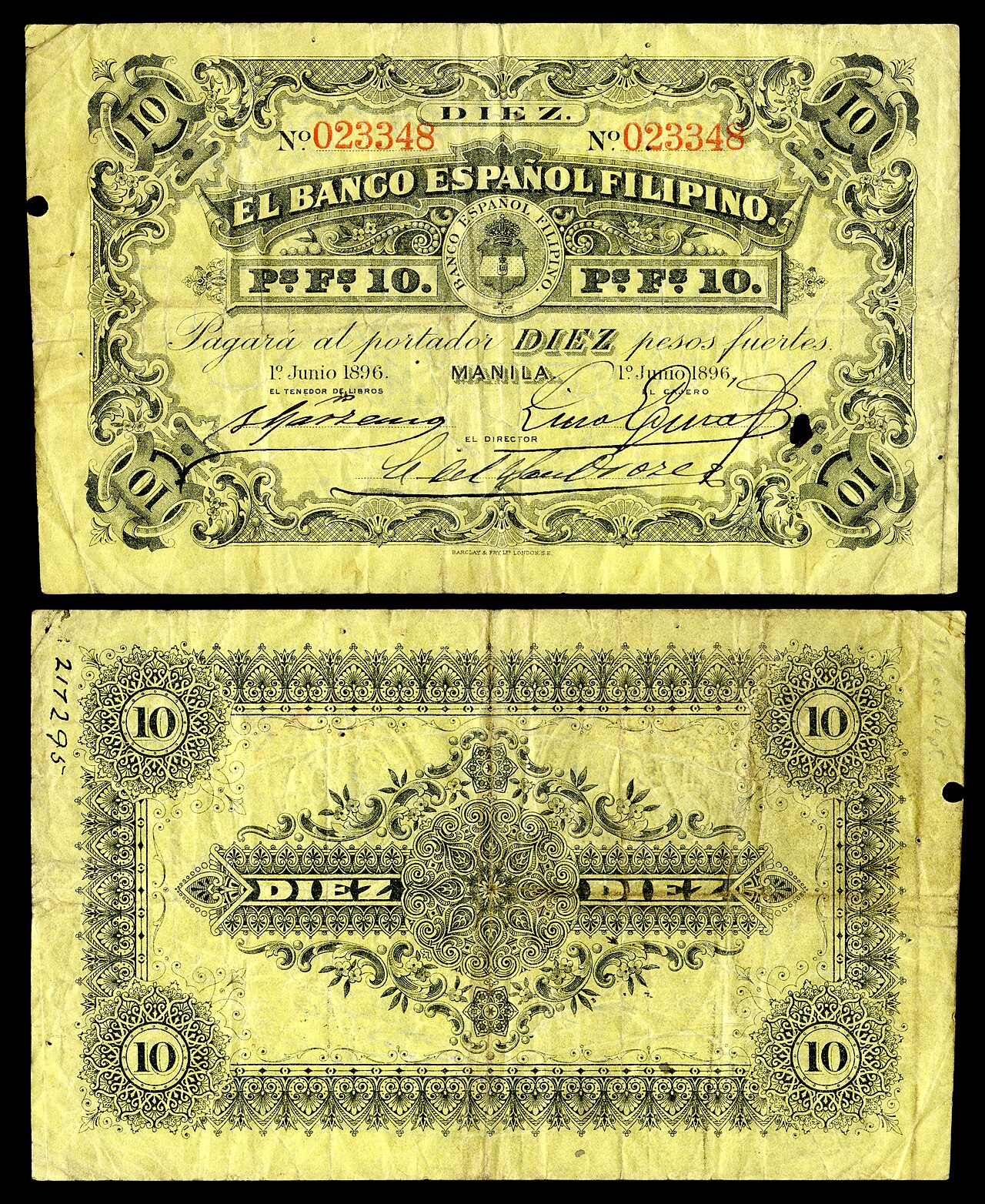
In 1852, the Banco Español-Filipino de Isabel II began issuing the first Philippine banknotes. Paper currency introduced a different kind of trust: its value rested not on the metal in the holder's hand but on a banking institution and its promise. Those early notes are now remarkable records of nineteenth-century Manila.
04 — 1898: a revolutionary republic prints its sovereignty
The Philippine Revolution and the declaration of independence in 1898 transformed the symbols of authority. The revolutionary government associated with Emilio Aguinaldo issued coins and paper money in the name of the new republic. Two-centavo coins were struck at Malolos, while one- and five-peso notes carried the marks and signatures of revolutionary officials.
These objects could be modest in appearance, yet their meaning was immense. They asserted the right of a people to organize its own money and institutions. American control soon ended their circulation, but they remain among the most evocative surviving objects of the independence movement.
05 — 1903: the peso under American administration
American authorities introduced a new currency system formalized by the Coinage Act of 1903. The peso was linked to the US dollar at two pesos to one dollar. Coins portrayed a female figure working beside an anvil, with a volcano in the distance; on the opposite side appeared the American eagle.
The design by Filipino engraver Melecio Figueroa brought two political worlds together on a single coin. The issuing authority was American, yet the imagery explicitly evoked Philippine labour and landscape. A 1903 one-peso coin is therefore far more than a piece of silver: it is a document of an era of transition.
06 — Silver certificates and the age of modern banking
Silver certificates and later treasury certificates became familiar during the early twentieth century. Banks expanded and the monetary system became increasingly standardized. The language printed on notes gradually shifted from Spanish to English, reflecting a wider change in government and education.
The Commonwealth inaugurated in 1935 brought further modifications to official seals and signatures. Currency was becoming a moving record of political institutions, carrying their changes into shops, markets and homes.
07 — 1942–1945: money under occupation
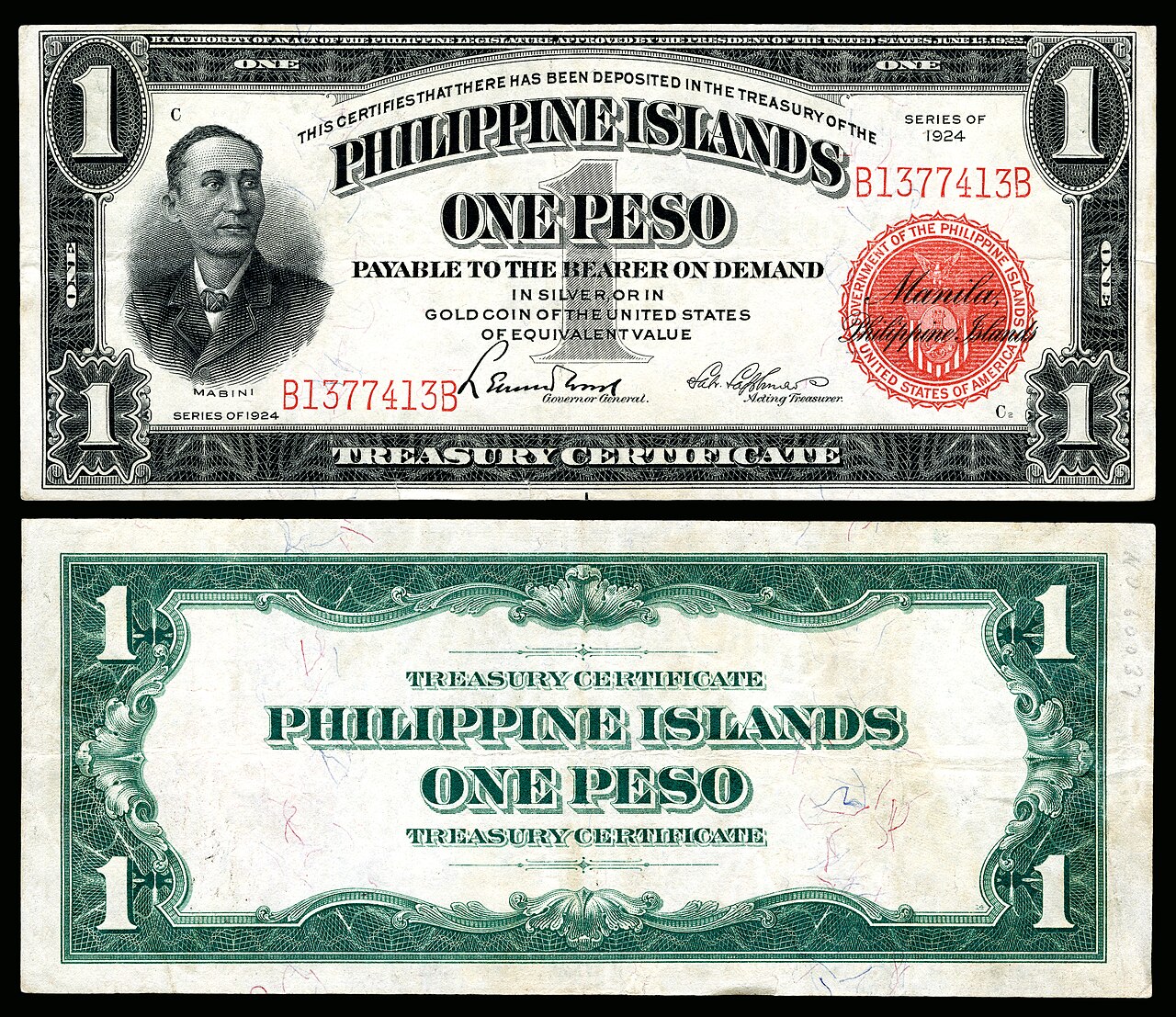
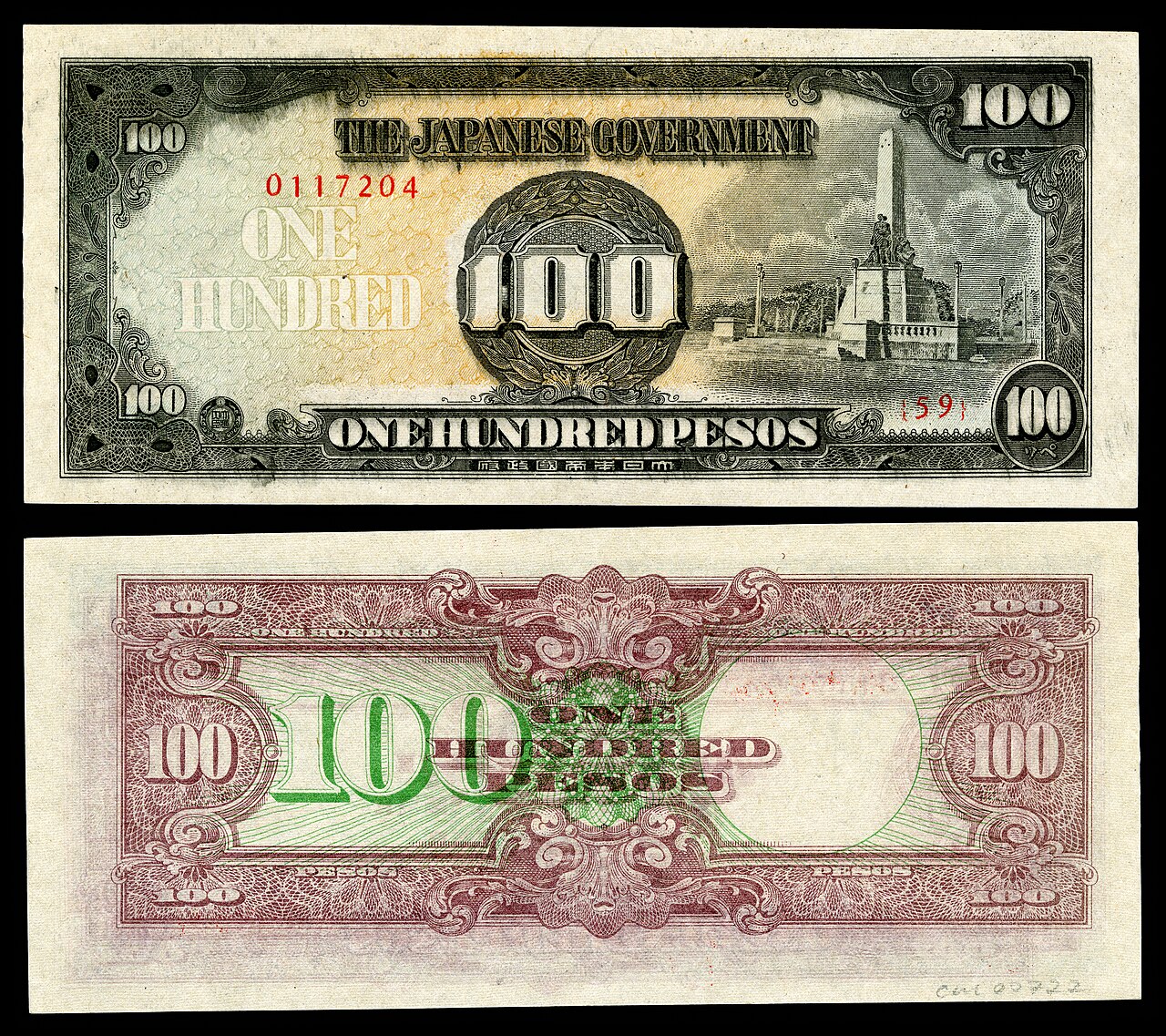
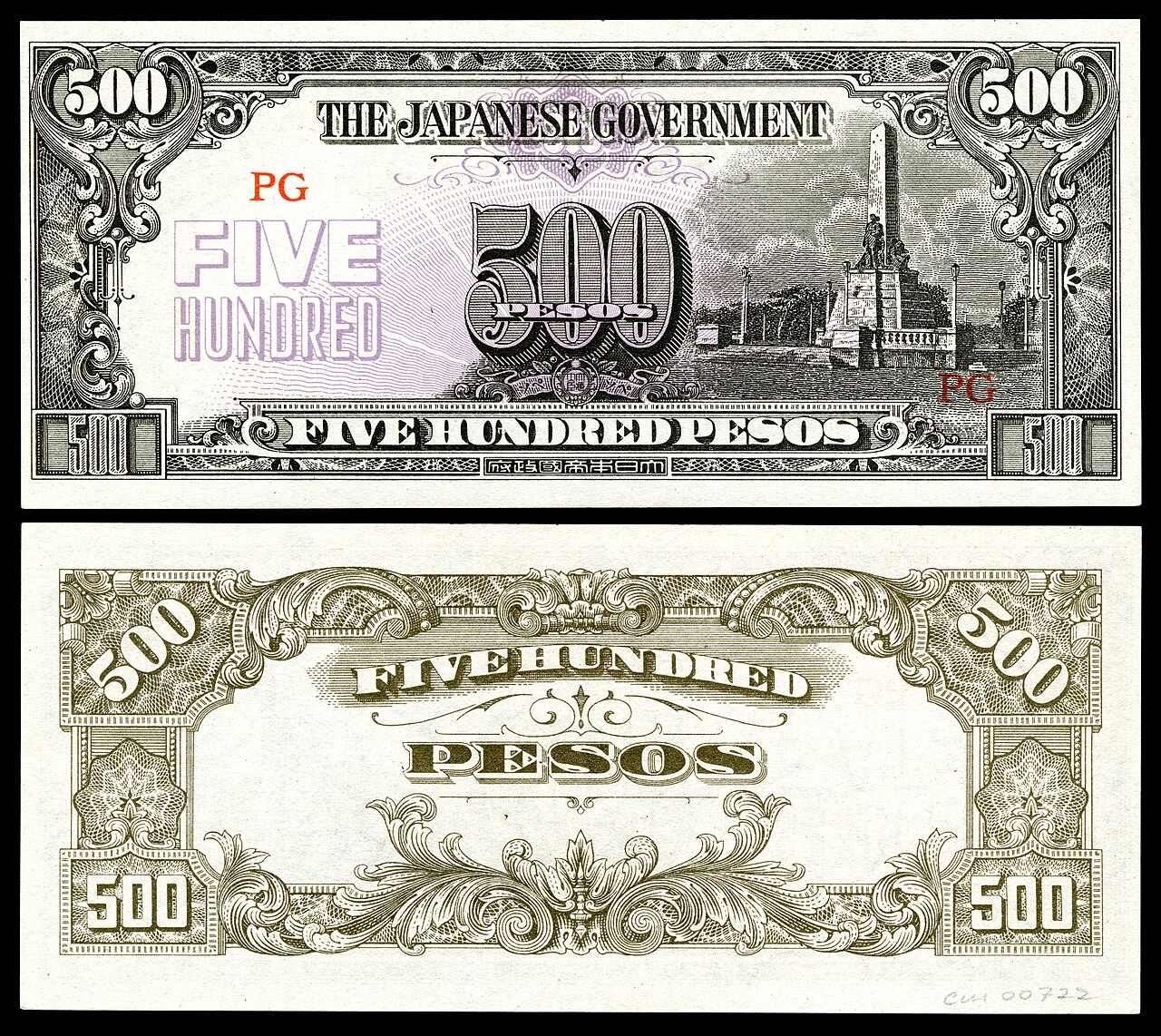
The Japanese occupation during the Second World War brought a new series of banknotes issued under the occupying government's authority. As shortages and wartime inflation intensified, increasingly large denominations were needed for ordinary purchases. Filipinos remembered these notes as “Mickey Mouse money”, a nickname that survived long after the war.
Meanwhile, guerrilla organizations and local authorities produced resistance currencies in various parts of the country. Two kinds of paper money could therefore circulate while representing competing claims to legitimacy. Surviving examples in museum collections tell the story of occupation and resistance in a particularly immediate form.
08 — Independence and the central bank, 1946–1949
International recognition of Philippine independence in 1946 marked a new beginning. Earlier treasury certificates bearing the “Victory” overprint had already signalled liberation and institutional restoration. Establishing a durable monetary system, however, required more than a new national flag.
The Central Bank of the Philippines began operations in 1949. Its creation strengthened the country's capacity to issue and manage its own currency. Republic-era banknotes progressively featured Philippine historical figures rather than colonial themes.
09 — National heroes, plants and animals
Post-war banknotes gradually developed a new visual vocabulary. English-language series gave way to issues with Filipino inscriptions and portraits of national figures including José Rizal, Apolinario Mabini, Andrés Bonifacio and Emilio Aguinaldo. Every denomination became a compact lesson in collective memory.
Coins also evolved. The Flora and Fauna Series offered a different language of national identity, highlighting wildlife and plant life. In a nation made up of thousands of islands, biodiversity provided a powerful visual alternative to political portraiture.
10 — New designs and a new central bank, 1985–1993
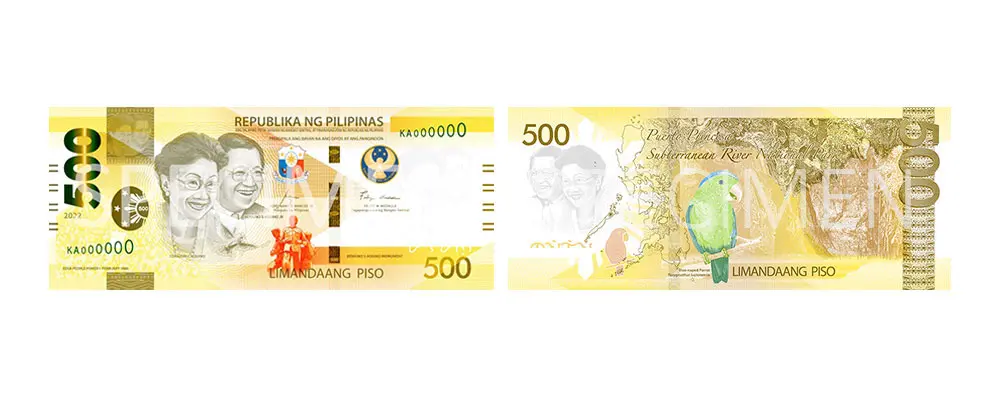
The New Design Series began in 1985, introducing updated portraits and stronger security features. The 1986 People Power Revolution and the country's subsequent constitutional changes gave particular resonance to some choices of imagery, including Benigno Aquino Jr. on the 500-peso note.
In 1993 the Bangko Sentral ng Pilipinas was established as an independent monetary authority. The institution inherited the responsibility of protecting monetary stability while modernizing the country's financial framework. The peso's story was once again about institutions as well as images.
11 — New Generation Currency: history meets landscape
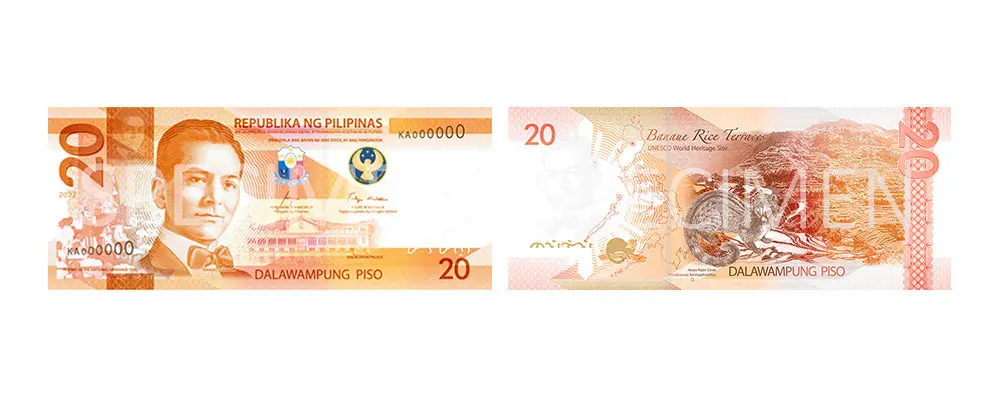
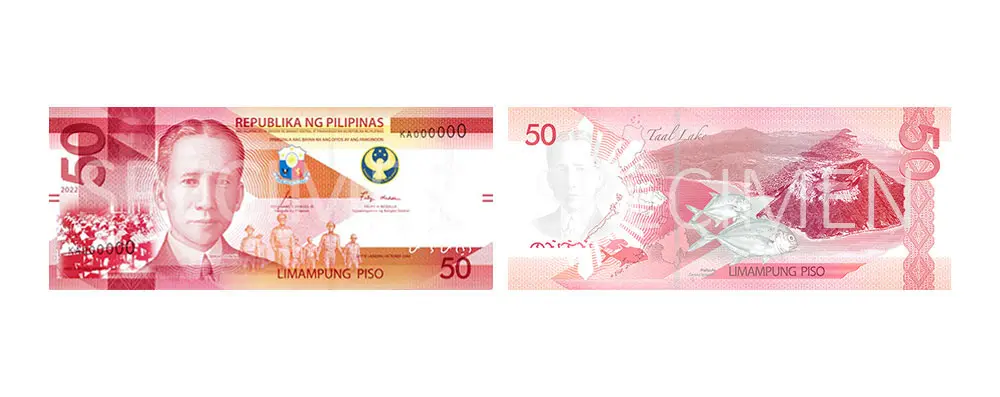
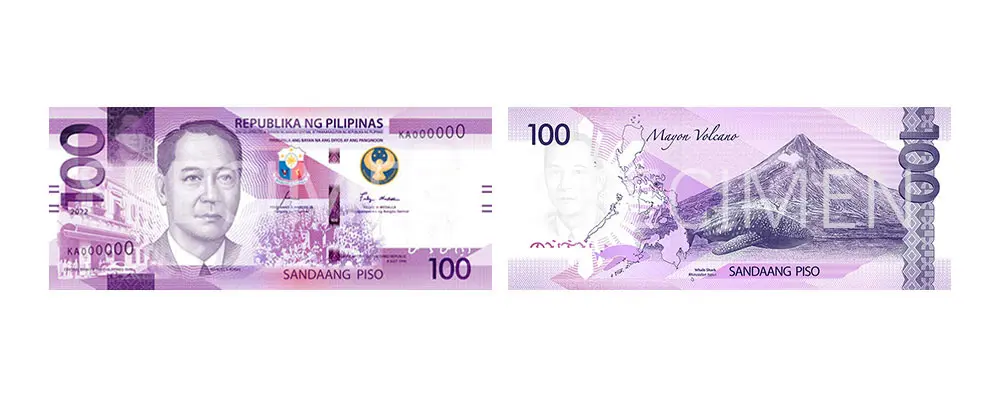
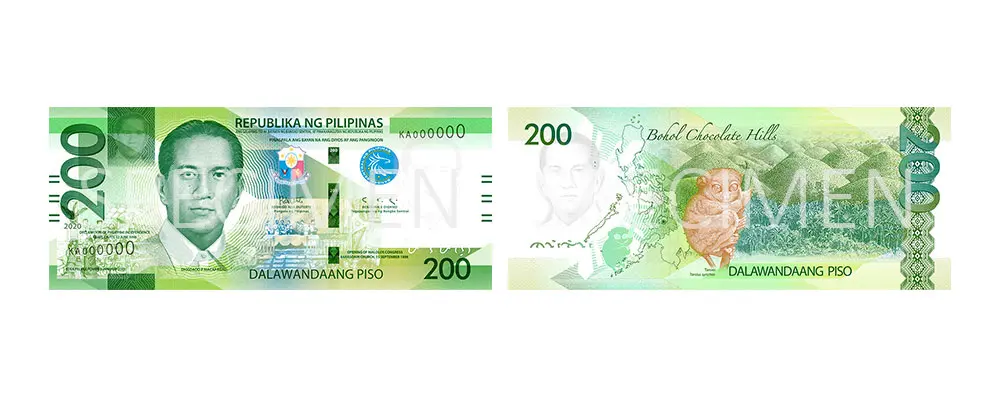
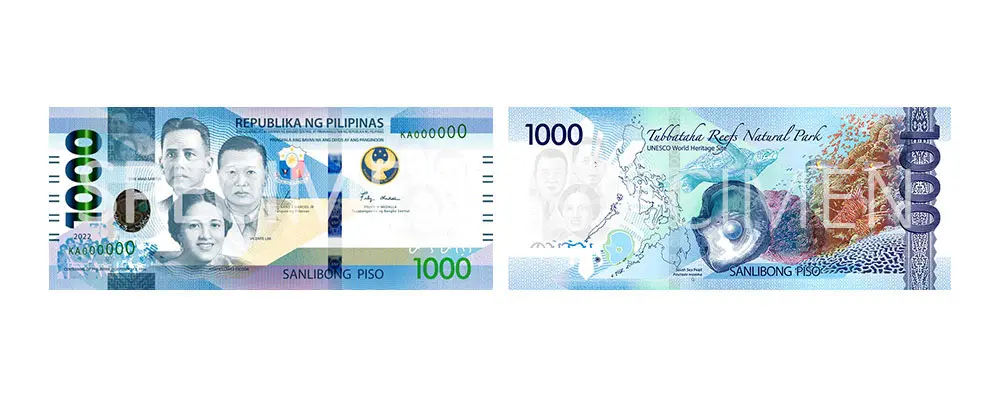
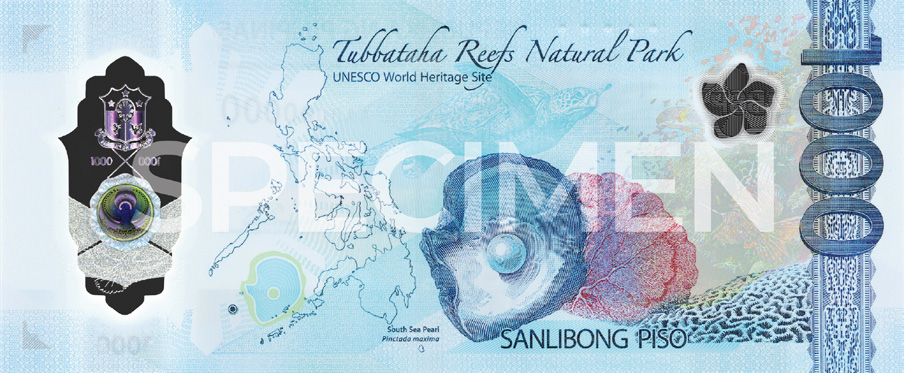
The New Generation Currency introduced from 2010 refreshed the country's banknotes. Historical figures and defining events shared the design with landscapes, animals and natural heritage. The reverse of a note could now evoke a reef, a rare species or a treasured environment.
These choices reflect the geographical diversity of the archipelago. Currency became a small invitation to discover the country beyond its major cities, while watermarks and other advanced security elements continued to develop.
12 — The polymer era: a different material for the peso
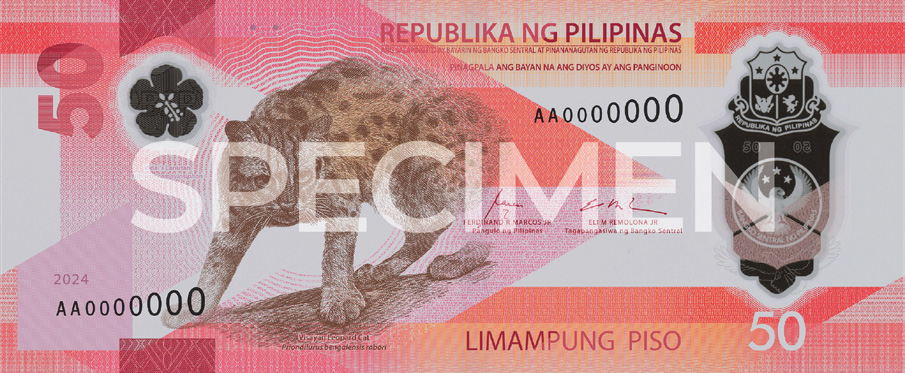
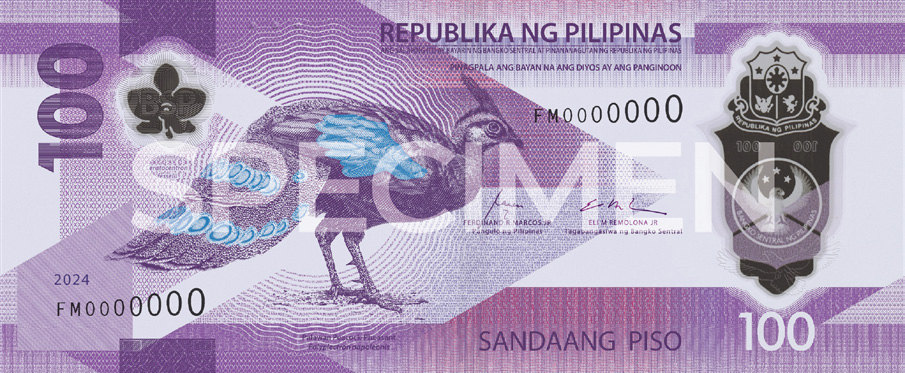
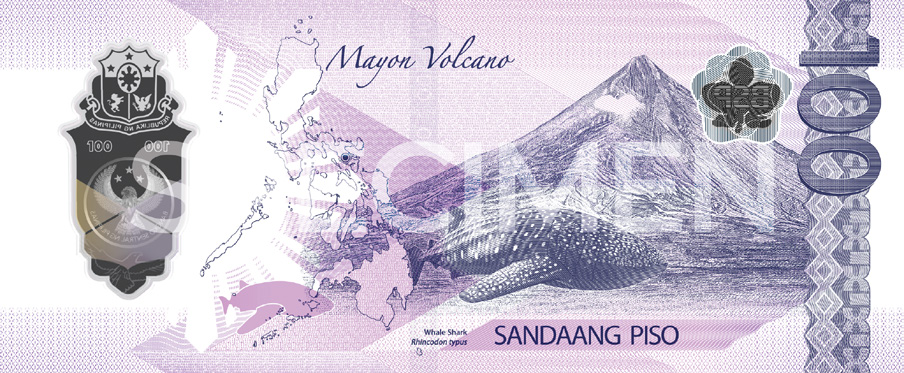
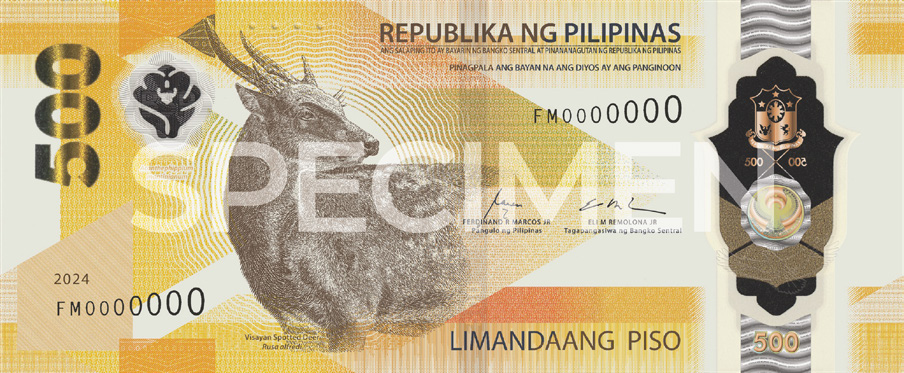
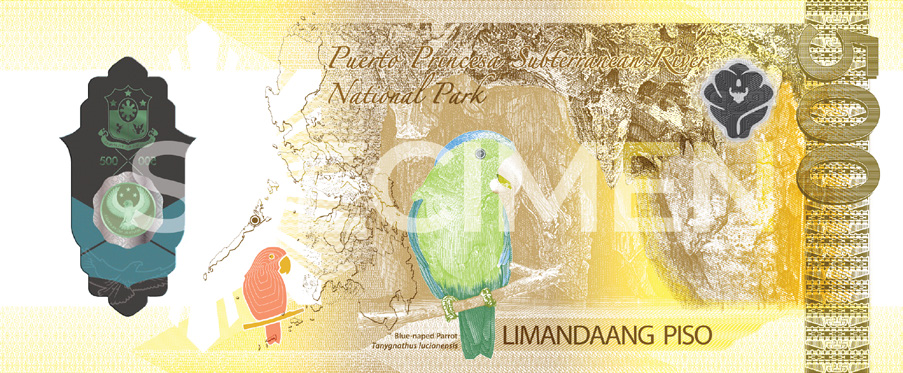
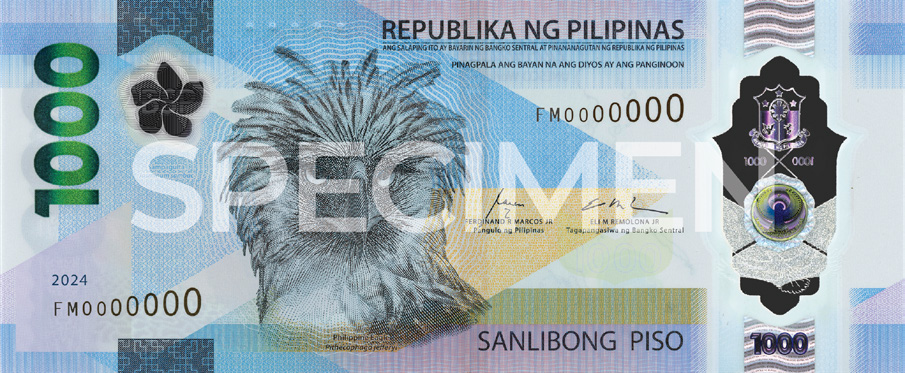
A 1,000-peso polymer banknote entered circulation in 2022. In December 2024 the Bangko Sentral launched a broader polymer family, adding 500-, 100- and 50-peso designs that circulate alongside paper banknotes. The new imagery places particular emphasis on the Philippines' natural heritage.
This marks a striking transformation in the physical history of money, from gold and silver to paper certificates and modern synthetic substrates. The peso continues to evolve not merely in purchasing power or appearance, but in the very material people hold.
The banknotes in pictures
Paper series — New Generation Currency
Polymer series — First Philippine Polymer
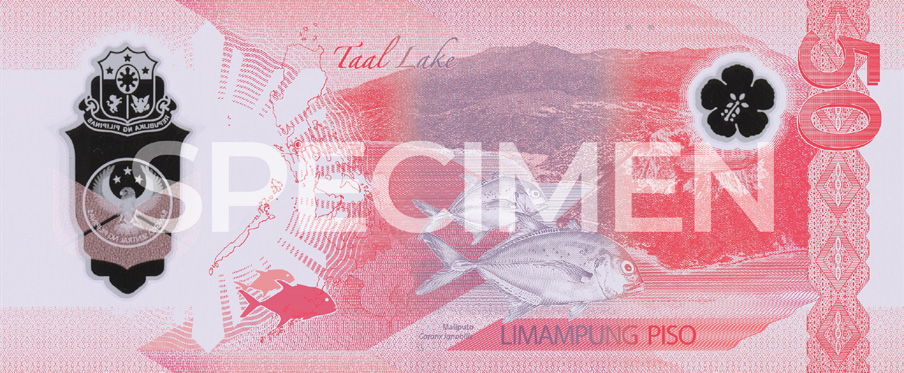
13 — Conclusion: a currency shaped by two oceans
The Philippine peso is an Asian currency carrying traces of Spain, the United States, revolutionary struggles and the archipelago's own modern achievements. Few monetary histories connect colonial silver, resistance banknotes and contemporary manufacturing so vividly.
Philippine coins and notes form a miniature museum of languages, political memory, people and landscapes. Their particular identity emerged from the meeting of several worlds, ultimately transformed into something distinctively Filipino.